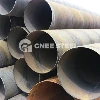
Vilka är de vanligt använda materialen för motståndssvetsade rör?
Carbon steel is the most common material for resistance welded pipes, with low cost and high strength. Stainless steel is used in corrosion-resistant environments, such as the food and chemical industries. Low alloy steel is suitable for scenarios with high strength requirements, such as oil pipelines. Galvanized steel is used outdoors or in humid environments to extend service LIFE . Valet av olika material beror på användningsmiljön och prestandakraven .
Hur väljer jag materialet med motståndssvetsade rör enligt applikationen?
High-strength low-alloy steel, such as X70 or X80, is required for high-pressure pipelines. Stainless steel or galvanized pipes are recommended for corrosive environments. Low-temperature environments need to consider the low-temperature toughness of the material to avoid brittle cracking. Furniture and decorative pipes focus on surface treatment and Aesthetics . Ekonomi är också ett viktigt övervägande för materialval .
Vilka är fördelarna och nackdelarna med kolstålmotståndssvetsade rör?
Carbon steel resistance welded pipes are low in cost, easy to process and weld, and suitable for large-scale production. They have high strength and can meet general structural requirements. The disadvantage is that they have poor corrosion resistance and need to be coated with a protective layer. Carbon segregation may occur during welding, affecting the quality of the Svets . Dess mekaniska egenskaper kan förbättras genom värmebehandling .
Vilka är de speciella kraven för motståndsrör i rostfritt stål?
Stainless steel resistance welded pipes require controlled welding heat input to avoid intergranular corrosion. The surface of the material must be clean to prevent the oxide layer from affecting the welding. Pickling or passivation treatment is required after welding to restore corrosion resistance. It is crucial to choose the right stainless steel grade (such as 304 or 316) . Dess produktionskostnad är högre, men dess livslängd är lång .
Vilka är egenskaperna hos tillverkningsprocessen för galvaniserade motståndssvetsade rör?
Galvanized resistance welded pipes can be galvanized before or after welding. Galvanizing before welding requires controlling the effect of the zinc layer on the welding quality. Galvanizing after welding requires thorough cleaning of the weld area to ensure the adhesion of the zinc layer. Hot-dip galvanizing and electrogalvanizing är de två huvudprocesserna . Det galvaniserade skiktet kan förbättra rörets korrosionsmotstånd avsevärt .